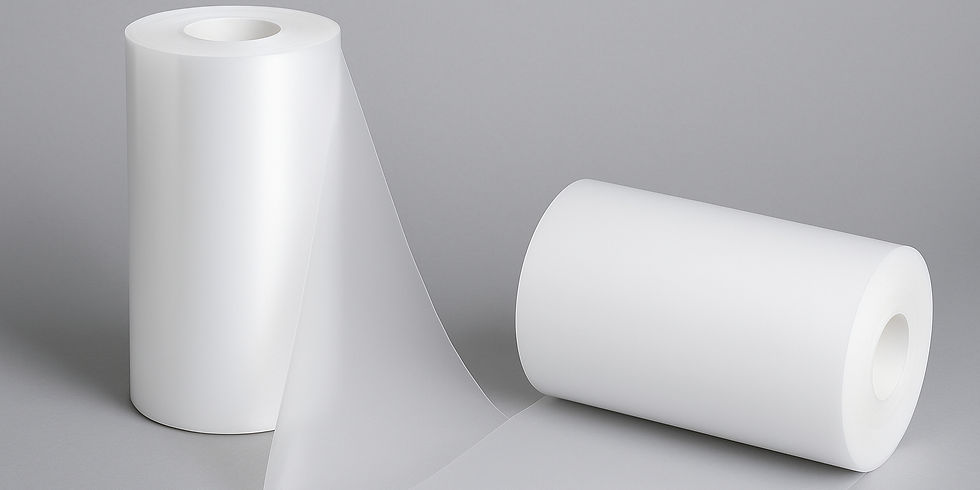
What Is a Co-Extruded Film? Advantages and Applications in Manufacturing
Updated: Oct 7, 2025
Advanced plastic film technologies have revolutionized how manufacturers approach packaging and industrial applications. Among these innovations, co-extruded film stands out as a multilayer structure that combines multiple materials to achieve superior mechanical, barrier, and chemical properties that would be impossible with traditional single-layer films. But what exactly is co-extruded film, and why is it becoming the preferred choice for so many manufacturers?
Understanding Co-Extruded Film Technology
Co-extruded films are multi-layered plastic films created by extruding multiple types of melted resins through a single die. This process results in a single film with combined properties. It allows for customization of the film's characteristics, such as barrier properties, strength, and flexibility. By carefully designing the layers and their compositions, manufacturers can achieve specific performance goals.

The Difference Between Extruded and Co-Extruded Films
Co-extrusion is a manufacturing process where two or more materials are melted and combined through a die to form a single, unified multilayer plastic film. In contrast, extruded films typically involve only one die and consist of a single-layer film made from a single material.
At Achilles, we offer 1–5 layer custom films using up to 4 different materials in a single run. Our cleanroom extrusion capabilities and automated thickness control ensure precise and reliable production. This is ideal for medical, pharmaceutical, and industrial applications.

Co-Extrusion vs. Lamination
Lamination and co-extrusion are two different methods of producing multilayer plastic films. They differ in how the layers are joined together. Lamination involves bonding pre-existing layers, while co-extrusion creates layers simultaneously through a single die.
By bonding separate layers after production, lamination can introduce inconsistencies. In contrast, co-extrusion creates a seamless structure during the film's formation, enhancing consistency and functionality.
Advantages of Co-Extruded Film
Customized Performance
Co-extruded films allow manufacturers to combine materials like PE, PP, EVA, EVOH, COPE, and Nylon. This customization helps tailor functionality to meet specific needs. You can achieve targeted barrier protection, flexibility, strength, or clarity as required for your product.
Cost Efficiency
One of the significant advantages of co-extruded films is cost efficiency. By eliminating the need for post-production lamination, manufacturers can use thinner layers without sacrificing durability. This not only reduces material costs but also streamlines the production process.
Improved Quality Control
In-line thickness monitoring and defect inspection ensure consistency across every roll of film produced. This level of quality control is essential for industries where precision is critical.
Cleanroom Manufacturing
Our ISO-class production environment is essential for high-purity industries such as pharmaceuticals and biotech. Cleanroom manufacturing minimizes contamination risks, ensuring that the films produced meet stringent quality standards.
Applications Across Industries
Co-extruded films are commonly used in demanding environments. Here are some key applications:
Pharmaceutical Packaging: Multi-layer films with EVOH provide excellent oxygen barrier protection, ensuring product integrity.
Medical Devices: Films designed for IV bags, wound care, dialysis, and diagnostic equipment are crucial for patient safety.
Industrial Use: Films with impact resistance and environmental durability are vital for various industrial applications.
Bioprocessing: High-purity films are designed for single-use systems in cleanroom conditions, supporting bioprocessing needs.
Global Production & Partnership
With facilities in the USA and Japan, Achilles supports clients worldwide with a resilient supply chain and collaborative product development. Whether launching a new product or enhancing an existing one, our team helps you design the right custom co-extruded film solution. From resin selection to pilot testing and full-scale production, we are here to assist you.

Ready to Create a Film That Performs?
Achilles is here to help you bring your vision to life with custom film manufacturing that meets today’s most demanding standards. Contact us today to learn more about how our co-extrusion technology can support your innovation.
Conclusion
In conclusion, co-extruded films represent a significant advancement in packaging technology. Their customizable nature, cost efficiency, and superior quality control make them an ideal choice for various industries. As manufacturers continue to seek innovative solutions, co-extruded films will undoubtedly play a pivotal role in shaping the future of packaging and industrial applications.
By understanding the unique advantages and applications of co-extruded films, businesses can make informed decisions that align with their operational goals. Embracing this technology can lead to improved product performance and enhanced market competitiveness.